
Sherwood Directory Collections Compared
No source confirms a long, separate run of Sherwood annual directories. Sherwood incorporated in 1948, and its early entries belong to the Little Rock and North Little Rock directory market. The CALS Roberts Library genealogy collection is therefore the main shelf. CALS reports Little Rock directory books from 1921 through the current volume in hard copy and on microfilm. Later books may cover Sherwood, but the first year in which a given Sherwood name or street appears must be checked volume by volume.
| Collection | Years | Where Held | Access |
|---|---|---|---|
| Little Rock city directories | 1921 to current | Roberts Library Research Room | Hard copy and microfilm |
| Metro telephone directories | Digitized 1953 to 1963 sequence | Library of Congress | Free page images |
| Reverse street listings | Within CALS directory holdings | Roberts Library | Research-room use |
| Federal census | Public through 1950 | NARA and genealogy databases | Online or library database |
| Sherwood-area newspapers | Sherwood News 1950 to 1970; Voice from 1964 | CALS databases and archives | Catalog or database search |
The March 1963 telephone volume is a key marker because its target sheet expressly names “Sherwood and suburban Areas.” A telephone listing is leaner than a full annual record, yet it can place a surname, street, locality, and number in one period. Earlier research should also test rural Pulaski County and North Little Rock headings.
Sherwood Directory Research at Roberts
Roberts Library Research Room sits on the second floor at 401 President Clinton Avenue in Little Rock. Its posted hours are Tuesday through Friday, 10 a.m. to 5 p.m., and Saturday, noon to 4 p.m.; the phone is 501-320-5700. The room combines annual directories, microfilm, open and closed stacks, archives, and in-room access to major genealogy and newspaper databases. Amy Sanders Library at 10200 Johnson Drive in Sherwood provides a closer CALS computer and database access point, but the historic directory shelf is at Roberts. Give staff the surname, street variant, rough year, and each likely locality label when asking about a precise volume or closed-stack item.
The Roberts genealogy resource page shows the research services and collection paths available before a visit.
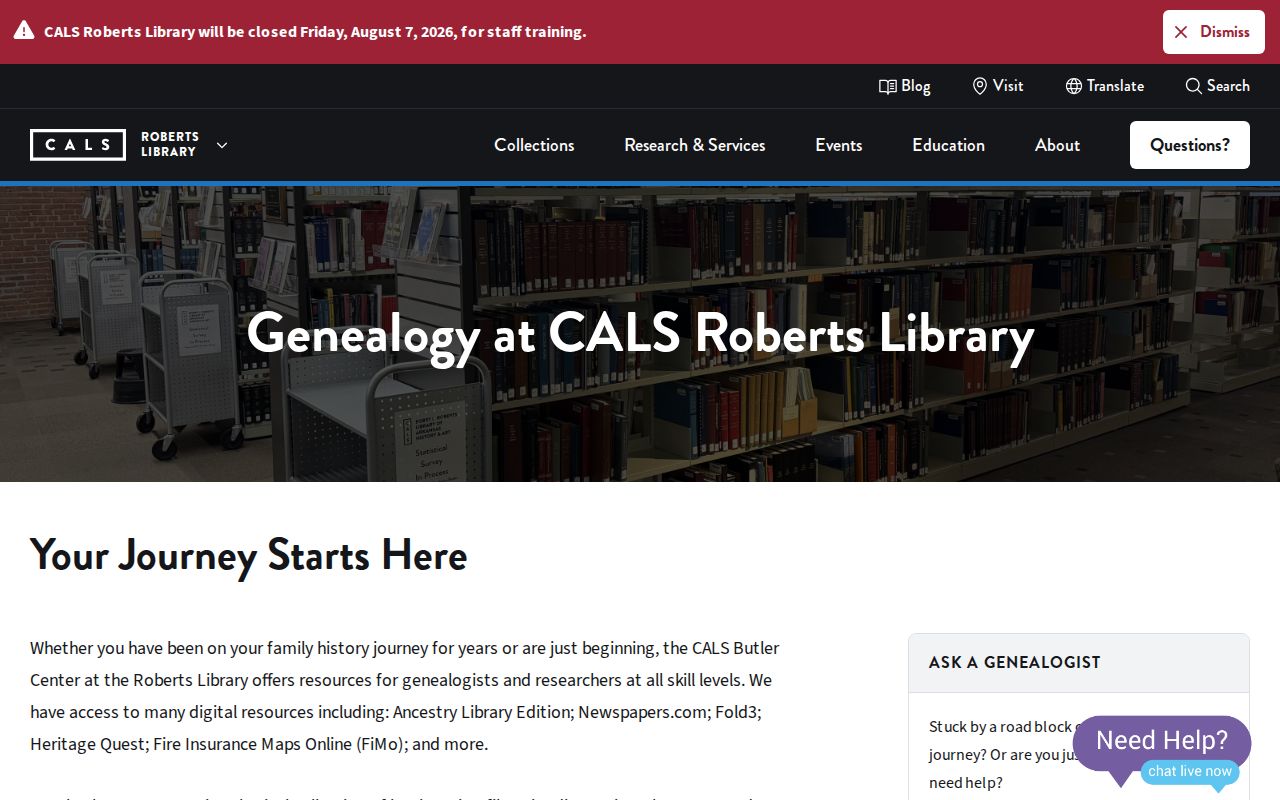
The screen reinforces that Sherwood directory work is part of a broad Arkansas genealogy collection. Call first when a precise volume or closed-stack item is central to the search.
Note: CALS does not publish an exhaustive online list of Sherwood-specific Polk years, so an on-site shelf check remains essential.
Reading Sherwood Directory Entries
An annual directory entry is a one-year snapshot. CALS confirms that a typical record can show the head of household, spouse, work or occupation, employer, and home address. The exact marks vary by volume. Copy the entry as printed, then photograph or transcribe the key from the front matter. Do not expand an initial or abbreviation from memory.
| Name | Printed surname, given name, initials, and sometimes a spouse. |
|---|---|
| Work | Occupation and, in some volumes, an employer or company. |
| Address | Residence number, street, or locality as printed that year. |
| Telephone entry | Name or initials, locality, street, exchange, and number when listed. |
| Front matter | Schools, churches, groups, civic facts, and the volume's own abbreviations. |
One mark can change the meaning. A work address is not a home address, and a spouse in parentheses is not a separate alphabetical listing. Some facts seen in directories elsewhere, such as owner marks, must not be assumed in the Sherwood-area books until that volume's key confirms them.
- Criss-cross directory
- A reverse section arranged by street and house number rather than surname.
- Householder index
- A name or address aid focused on the person listed for a household, not every person who lived there.
- Abbreviation key
- The volume's own guide to shortened words and symbols. It controls how an entry should be read.
Sherwood Records in Digital Collections
The Arkansas Studies digital collections add maps, photographs, manuscripts, and documents to named directory listings. Search a surname with a road, business, school, or group. Results can supply context that a short annual entry omits, while the entry supplies a date and address that makes a broad image search more useful.
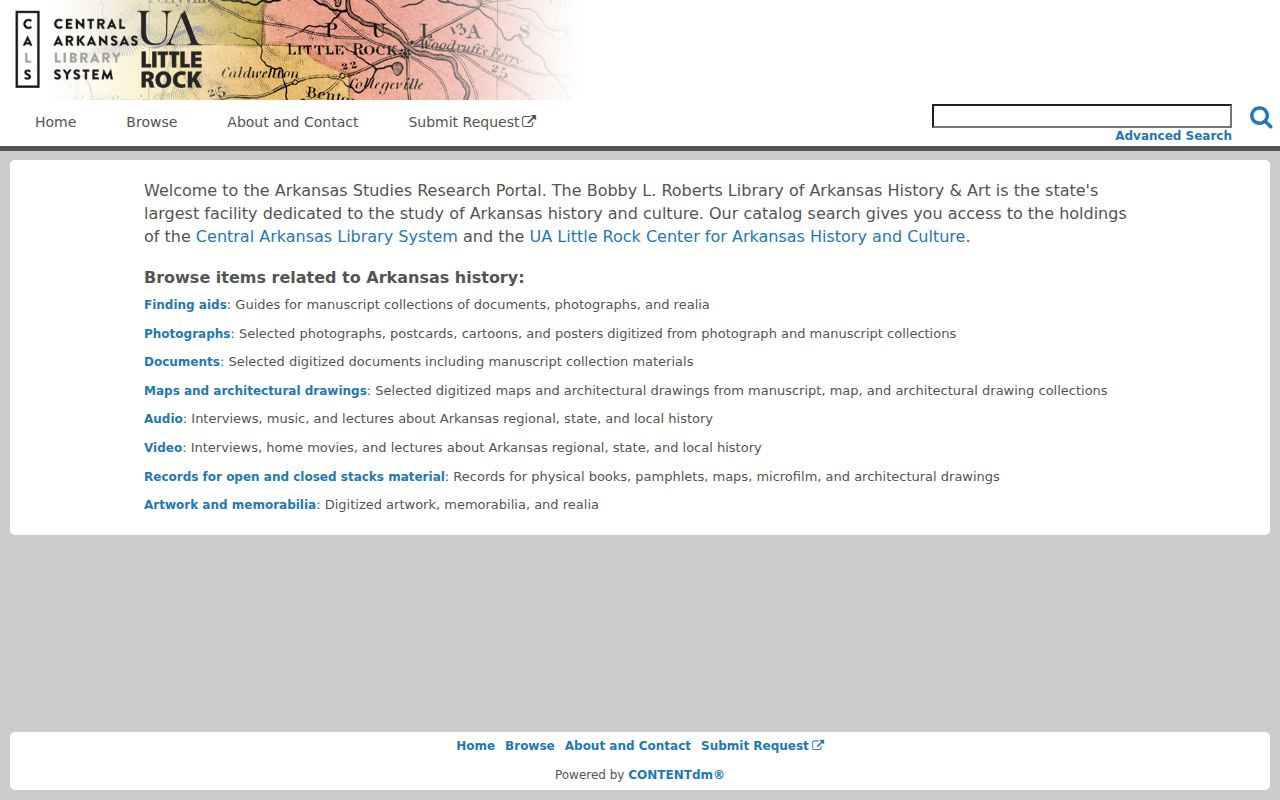
The digital portal is a companion source, not proof that every Sherwood directory has been scanned. If a search yields no directory image, return to the Roberts shelf and use the portal for related photographs or papers.
Other CALS tools include Index Arkansas, HeritageQuest, NewspaperARCHIVE, Chronicling America, HeritageHub, and Fire Insurance Maps Online. Access differs by resource. Some are open on the web, while others require a library card or in-room use. The Arkansas State Archives is the next access channel for county records and archival collections not found in the CALS catalog.
Sherwood Names Beyond City Directories
Yearbooks can reconnect a directory name with a school, class, club, team, or teacher. The published CALS list includes nearby North Little Rock, Northeast, and North Pulaski runs, though the years vary. Sylvan Hills is not on the published list of 25 digitized schools. That absence does not prove CALS lacks a nondigitized volume, so ask about cataloged or closed-stack holdings.
The CALS digitized yearbook portal shows the school collections currently presented online.
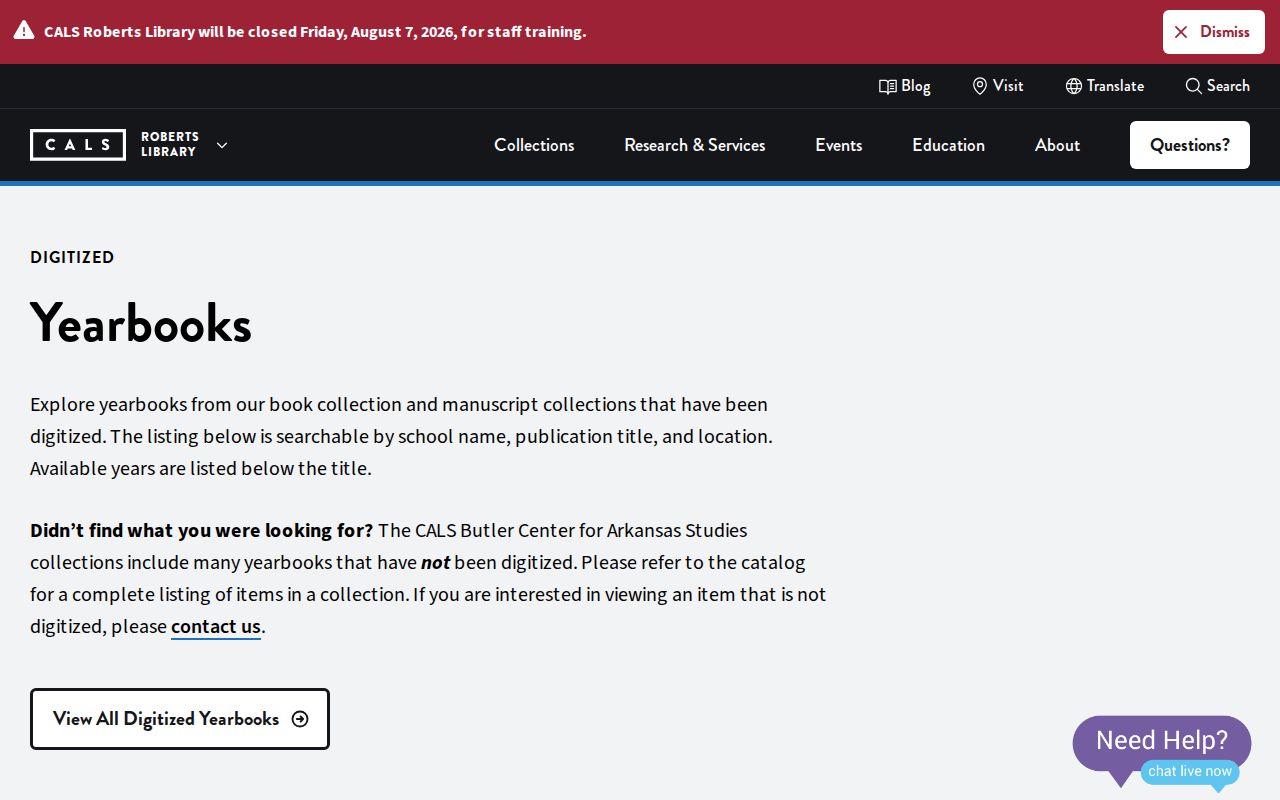
A yearbook hit should be tied back to the annual directory by spelling, period, and place. A shared surname alone is weak evidence, while a matching school year, household address, and directory entry form a much sounder identity link.
Local books provide another name layer. The Signs Say Sherwood and The Signs Still Say Sherwood contain resident, business, street, and photo clues. Community newspapers then help explain a move, death, school event, club role, or family tie. Together, these sources extend the spare facts printed in an annual directory.
Sherwood Directory Labels Changed
Sherwood had no distinct postal identity for much of its early life. The city incorporated on April 22, 1948, but mail went through North Little Rock until the first Sherwood post office opened in 1966. A separate ZIP did not arrive until the 1990s. The result is a real index trap: an accurate older record for a place now in Sherwood may be filed under North Little Rock, Sylvan Hills, Gravel Ridge, Jacksonville, or rural Pulaski County.
Boundary change adds a second trap. Trammel Road joined Sherwood in 1975. Gravel Ridge remained outside the city until the 2008 annexation. Search the label used in the target year before treating a missing Sherwood heading as a missing person.
| Year or Era | Directory Meaning |
|---|---|
| 1921 onward | CALS Little Rock city directory run provides the wider shelf. |
| 1948 | Sherwood incorporates; the directory trail still rests in metro and rural sources. |
| 1950 | First open federal census after incorporation. |
| March 1963 | Digitized telephone volume explicitly names Sherwood and suburban areas. |
| 1966 | First Sherwood post office opens. |
| 1990s | Sherwood receives a distinct ZIP from North Little Rock. |
| 2008 | Gravel Ridge becomes part of Sherwood. |
Note: The exact year Sherwood first appears in the CALS city directory run is not stated online and must be checked in the books.
Koehler Lane's Sherwood Record Trail
Koehler Lane shows why a name-and-year city directory search works best across record types. The Encyclopedia of Arkansas history of Sherwood identifies 829 Koehler Lane, built for Paul Koehler in 1927, as probably the oldest standing home within the original city limits. Members of the Koehler family remained linked with the lane. Yet the house predates Sherwood's incorporation by more than two decades.
A 1920s search should begin with Sylvan Hills, rural Pulaski County, and metropolitan directory labels rather than insist on “Sherwood.” Then compare the address with census, property, probate, news, and later reverse-directory evidence. The local story makes the general rule plain: current city limits cannot be projected backward onto an old index.
Trace Sherwood Families by Year
Annual directory books can fill the years between federal census schedules. Start with one known fact, preserve the printed form of each entry, and make a dated log. The goal is not to force every similar name into one family. It is to build a sequence in which address, spouse, work, and nearby households change in a way the sources support.
- Find the surname in an alphabetical section and copy the name, initials, spouse, work, employer, and address exactly.
- Check the same surname in the volumes before and after it. Record each move or spelling change without guessing why it occurred.
- Use the reverse street section to read the house number and adjacent listings. Treat those entries as neighbors for that volume, not permanent ties.
- Pair 1940s and 1950-era entries with the 1940 and 1950 census. The public census can identify household members that a city directory omits.
- If the name vanishes, check spouse variants, newspapers, obituaries, probate, and the next likely place label.
A first appearance may mark arrival, adulthood, or newly listed phone service. A disappearance may mark a move, death, marriage-name change, or choice not to list. The Roberts Library directory and yearbook research notes provide a useful CALS starting point. For a present-day address chain, shift to the Sherwood street directory, which owns the modern parcel and deed route.